Pushing the Boundaries – Encroachment
A recent Wellington case, Collins & Turton v Winspear, is a useful reminder to undertake careful due diligence and to take prompt action when dealing with encroachments.
Two neighbours ended up in the District Court over an encroachment from over a century ago. The neighbour’s house was placed approximately 1.4 metres over the affected owner’s property, the result of a subdivision long before either party purchased the land. The Court granted an easement to the encroaching owner and awarded $14,000 in compensation, noting that both parties had known of the encroachment and a clear boundary would allow each to sell with certainty.
What is an Encroachment?
Encroachment occurs when a structure, or part of a structure, crosses the legal boundary and sits on a neighbouring piece of land. Under New Zealand law, an encroachment is considered a trespass of land, and the encroaching landowner is liable to remedy the situation regardless of its origin.
Physical features, such as fences and buildings, are not defined on a record of title from Land Information New Zealand. They can only be confirmed by a formal survey. As a result, encroachments can go unnoticed for years, often only coming to light when the property is being subdivided or sold.
Where Do I Start?
It is important to understand exactly where the boundaries lie. A licensed surveyor can establish the true boundary of a property, identifying whether there is an encroachment and if so, to what degree. Survey costs can vary depending on the size, urgency, and complexity of the matter. Nonetheless, a survey is a necessary investment to obtain certainty as to the boundaries.
A property lawyer should be engaged to review the record of title. This can reveal whether there are historical agreements or rights relating to the encroachment, or whether the title is “limited as to parcel”, for example, meaning the recorded boundaries are not guaranteed. Identifying any registered instruments and title details early can help avoid additional costs, delays, and difficulties down the line.
How Can I Resolve the Problem?
Encroachment disputes may be resolved amicably through open discussions with your neighbour. Initial communication can significantly affect the path and overall resolution of the dispute. Such practical resolutions may include negotiating the removal of the encroaching structure, selling the affected portion of land to the neighbour, formalising a new boundary through subdivision, or granting an easement that gives them a legal right to keep the structure in place.
It may be useful to keep a record of all conversations and correspondence with your neighbour in case the matter escalates. Recording the date, discussion and any agreement reached means nothing is left to memory.
If no agreement can be reached, either party may apply to the courts for a resolution. Subpart 2 of Part 6 (ss 321 – 325) of the Property Law Act 2007 governs wrongly placed structures, such as buildings, paths, retaining walls or fences. Whether relief should be granted is an exercise of judicial discretion, considering what is just and equitable in each scenario. The “just and equitable” test requires the Court to balance the competing interests of both landowners. Knowledge of the true boundary by either party does not prevent the Court from granting relief. The Court may order the encroaching structure to be removed, vest the encroaching land in the owner, grant an easement over the land or a right to possession of the land.
Depending on the circumstances, claims that could be brought include nuisance, trespass, undue interference, or an injunction to prevent construction that would encroach. The merits of any claim, and the relief available, will depend on the specific facts. Obtaining legal advice is key to protecting your interests and achieving the best outcome.
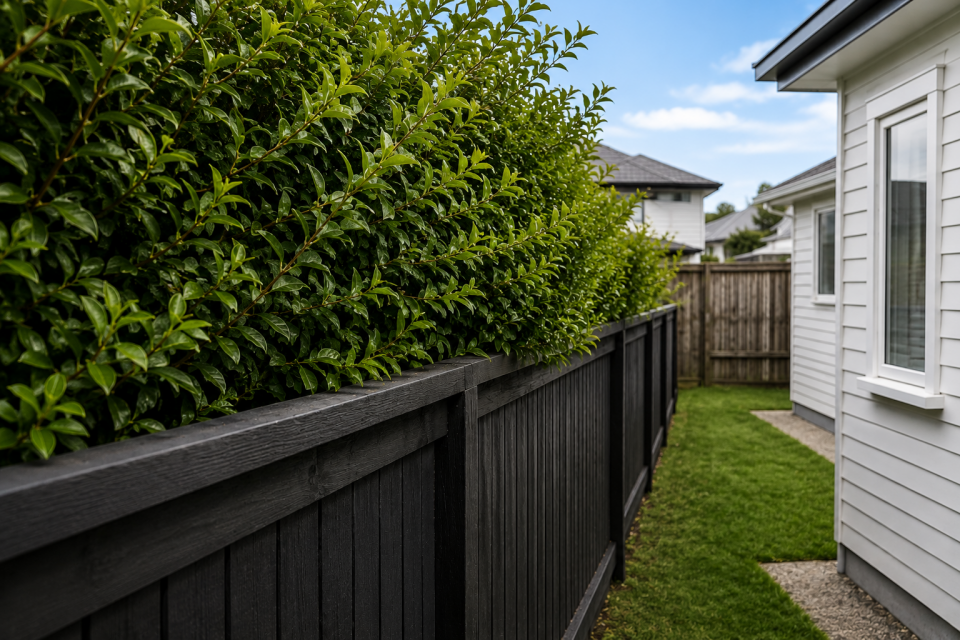
Fences can be treated differently. Where the encroachment is a fence, the courts may not grant relief under the Property Law Act 2007 if the dispute can be resolved under the Fencing Act 1978. The Act requires a boundary fence to be built as close as possible to the boundary line. If the fence is found not to be on the legal boundary, the court can order the parties to relocate the fence.
The Risks of Delay
Left unresolved, an encroachment may give rise to acquiescence or a claim for adverse possession.
Acquiescence occurs when a property owner is aware of a neighbour’s encroachment but does nothing about it for an extended period. By not objecting, the owner implicitly accepts the encroachment on their land. This may limit your ability to seek removal of the structure or full compensation.
An encroaching landowner who has had exclusive and continuous use of the area for at least 20 years may apply to the courts for ownership of that portion of land. A claim for adverse possession can be difficult to establish and is generally not available where the land is occupied due to a mistaken boundary marking, being the manner in which many encroachments arise. If the claim is successful, adverse possession can result in a transfer of formal ownership to your neighbour.
Early advice and prompt action are important in any case to protect your position. Whether a claim is available will ultimately depend on the facts.
Get Help
Addressing an encroachment promptly and thoroughly will help protect your property’s value and provide a clean title. The potential cost, time, and stress involved are real, but may be outweighed by the long-term value of certainty and a marketable title.
This article is general information only and is not legal advice. Please seek advice specific to your circumstances and contact a member of our Property Team for further information.